
Recently I came across a short, beautiful poem by the Polish poet Czeslaw Milosz that we read together in our Great Hall Sunday school class a few weeks back. I must have read it a few dozen times over these past weeks, perhaps as an unconscious attempt to prepare my heart for this season of thanksgiving and gratitude we have already begun with our All Saints observance.
“Gift”
A day so happy.
Fog lifted early, I worked in the garden.
Hummingbirds were stopping over honeysuckle flowers.
There was no thing on earth I wanted to possess.
I knew no one worth my envying him.
Whatever evil I had suffered, I forgot.
To think that once I was the same man did not embarrass me.
In my body I felt no pain.
When straightening up, I saw the blue sea and sails.
As someone remarked when we discussed it then, this poem says so much in just nine lines of text. It begins with simple pleasures, or perhaps “delights.” An unexpectedly clear morning. Working in the garden. The presence of hummingbirds and honeysuckle flowers. And at the end, the blue sea stretched out before him with sailboats in the distance, hinting toward a sense of freedom and expanse in an otherwise intimate poem.
Yet at the heart of this “happiness” he feels, and what makes up most of the poem, is his recognition of all that is not present, but typically is.
Nothing he wanted to possess.
Whatever evil he had suffered, forgotten.
Embarrassment for the person he had been, absent.
In his body, no pain.
All things that stand in opposition to the freedom, openness, and possibility of the poem’s ending.
I think of two things. First, how the “gift” of this day is rooted in an awareness of and involvement in the gifts of creation: the light of morning, feeling garden dirt under his fingernails, communion with other non-human, living things. In fact, it seems as though this communion with the fullness of life around him prepares him to avoid, let go of, or leave behind those usual grievances and hurts.
And this points to the second reflection, which is that those grievances or hurts do not cease to exist (even his usual aches and pains will surely return). The gift seems to be that for that fleeting, extended moment, they were not top of mind and did not shape the way he received the day.
All of which suggests that so much of our happiness depends on where we choose to look. Where we will focus on attention, offer our hands, direct our energies and efforts.
This is good news. It is good news that our days are not predetermined. That our grievances and sufferings are not absolute. That we have a role to play–and a large one at that–in how we will receive each day for the gift that it is.
SHD

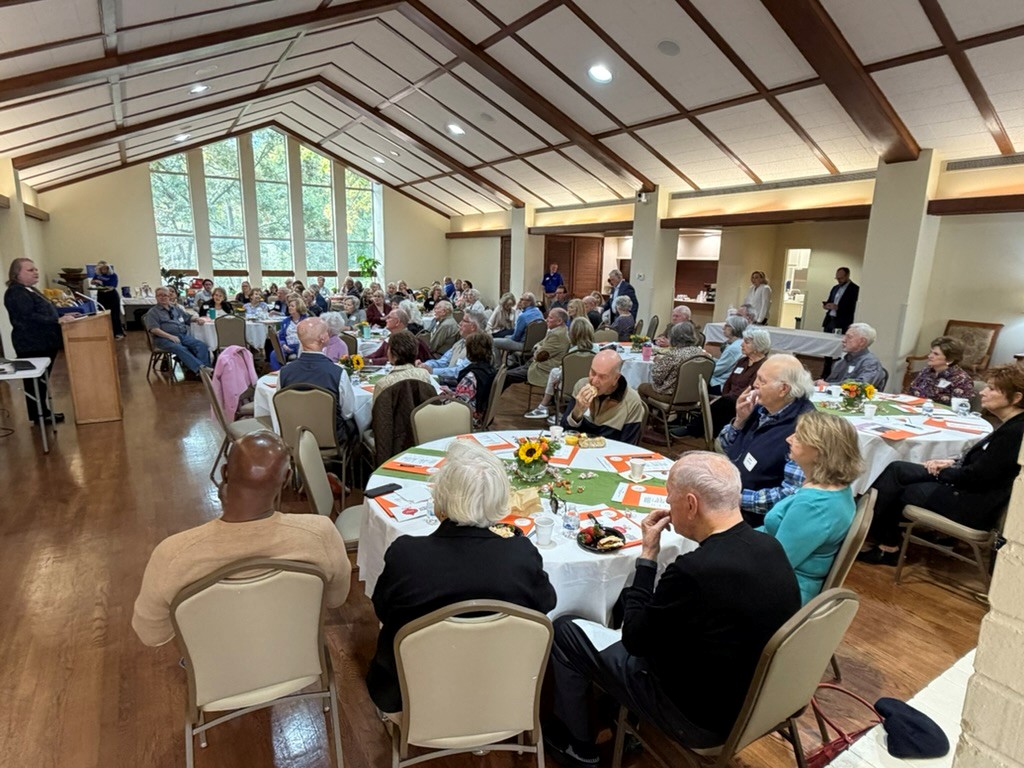 The Senior Adult Ministries Committee serves as an integral part of planning and implementing programs and learning opportunities for senior adults. The Committee adopted the theme of Northminster Cares to serve as a guiding vision for senior adult ministries. Our church has over 300 members ages 60 to 100, and our goal is to keep these valued members connected to the church. Regular visits are made to those unable to attend church in person and the committee plans relevant, timely senior-focused programs for those who can attend.