Welcome to our new monthly email newsletter. This is the second half of our newly introduced bi-weekly rhythm of emails to help keep us better connected as a congregation.
Near the end of each month, you’ll receive an email listing all the events and goings-on for the month ahead (with a birthday calendar). This list will include links to event pages on the redesigned church website with more information that you can save or share.
Near the middle of each month, you’ll receive a newsletter such as this one, featuring:
- a note from me or one of the other pastors,
- a committee spotlight to share some of the good, often-unseen work done by one of Northminster’s many ministries
- a missions spotlight on work done outside the church walls,
- a new section we’re calling “The Northminsterites,” in which we’ll profile an individual, family, or household within the church.
We’ll also include monthly financial info, a link to the church calendar, and other necessary announcements.
Each of these sections will include links to the full articles on the church website.
This will be a big change for some, and we will continue to mail worship bulletins to those members and friends who do not have email access to ensure they receive all the info from our previous newsletter.
Thank you for your patience as we continue to roll out these new projects. And please continue to offer feedback. This helps us know what is working, what needs tweaking, and where the gaps are.
For assistance downloading the new Northminster digital directory app or finding the livestream on your TV or someone you know, email Geoff Davidson.
Summer Bible Study

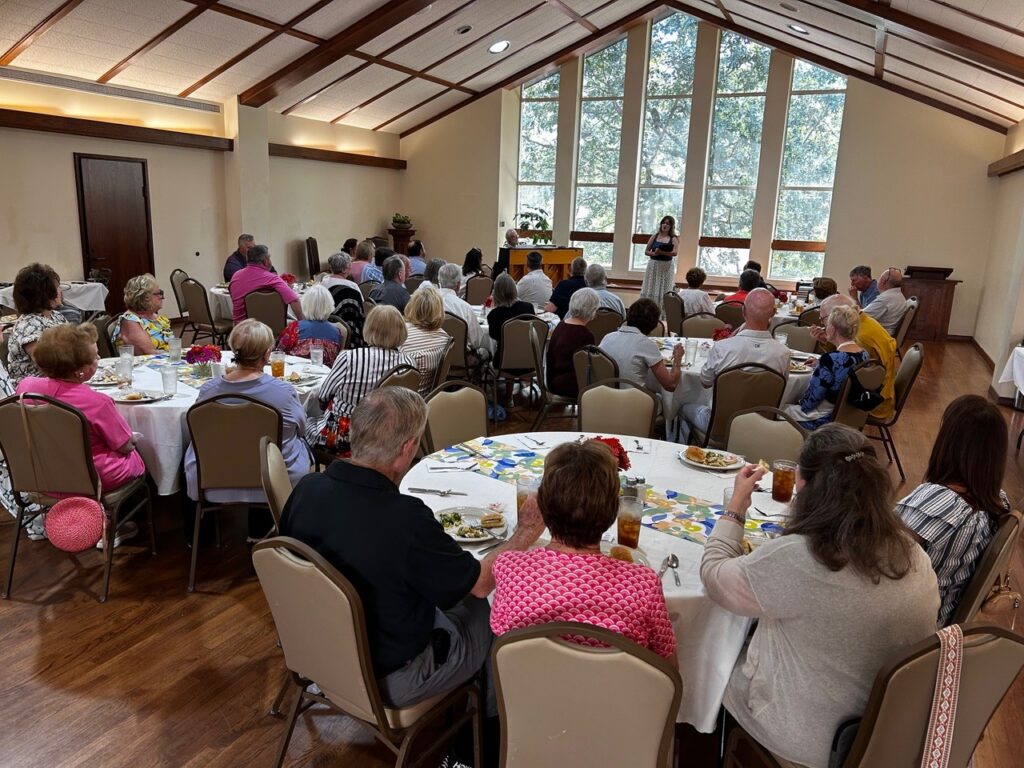
Thank you to those who have attended the first two sessions of our summer Bible study on the parables. We’re using Amy-Jill Levine’s provocative book, Short Stories By Jesus: The Enigmatic Parables of a Controversial Rabbi, as a starting place and conversation partner.
So far, we’ve covered some of the most beloved stories in Luke’s Gospel in the parables of the Lost Sheep, Lost Coin, and Lost Sons, and the Good Samaritan.
Next week, we will look at a lesser-known parable found in Matthew’s Gospel, “the Pearl of Great Price.”
Each week is independent from the next to accommodate all of our itinerant summer schedules. Special thanks to Kathryn Davis for providing our delicious meals.
What I’m Reading
I once had a beloved church member and former college Old Testament professor tell me she could always tell what I was reading from my sermons…which I hoped she meant as a compliment! I thought I would save you all the guesswork.
A few weeks ago, a reading group I’m in read one of Wendell Berry’s typically plain-spoken essays, “Why I Am Not Going To Buy A Computer.” Published in the late 1980s in Harper’s Magazine, this essay feels especially prescient as the sudden ubiquity of AI raises fundamental questions about the principled use of technology, especially when it seeks to replace human connection. Needless to say it generated good discussion. 
That same reading group has decided to tackle one of his novels, Hannah Coulter, from his famed Port William series, next.
To prepare for this series on the parables, I revisited one of my favorite books on the subject, John Dominic Crossan’s The Dark Interval: Towards a Theology of Story. In this concise, potent volume, Crossan situates parable as a counter to “myth.” Myths are stories that create our world, describing the foundations of what we know to be good and true. “Parable,” he argues, “shows us the seams and edges of myth.” It cracks open the door for us to imagine a different story.

I’ve also been revisiting the work of one of my favorite poets, Patrick Phillips. His collection, Chattohootchie, in which he writes movingly and candidly about his childhood in Georgia, changed my understanding of what poetry can look and sound like. His most recent collection, Song of the Sliding Doors, is similarly powerful, though he now writes about middle age, loss, and the tenderness of memory.
I’ve been reflecting on the comfort of reading someone else’s words that speak so clearly for your own heart. It is something approaching what Paul writes in Corinthians, of being “fully known.”
SHD